ServicesExit Readiness Assessment
Exit Readiness Assessment in Flower Mound
A sale, a retirement or a handoff to family or staff goes better when you know in advance where a buyer or successor will push back. Our exit readiness assessment scores your business and your personal plans, then documents each gap with the cause behind it.
What an exit readiness assessment measures
An exit readiness assessment is a structured check of two things. The first is whether your company can be transferred at a fair value. The second is whether you, the owner, are ready to step away from it. Buyers, lenders and successors all ask the same questions. How much of the revenue depends on you? Are the books clean enough to defend the earnings number? Will key customers and staff stay after the transition?
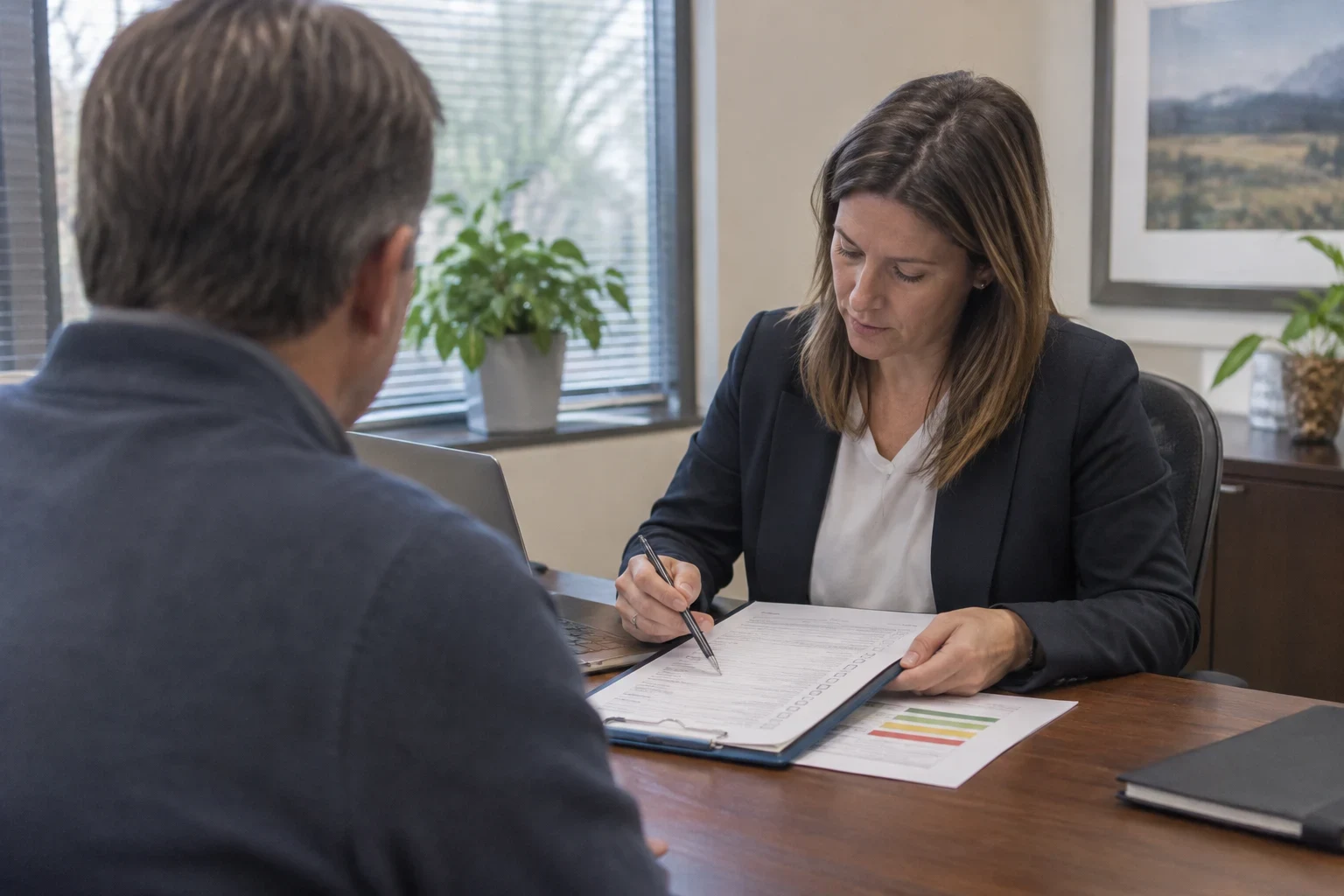
We look at those questions the way a buyer's diligence team would, but earlier, while you still have time to act. The result is a written scorecard. Each finding names the cause, explains why it affects value and ranks it by how much it matters.
Many owners start here before committing to a full exit plan. The assessment shows whether the next step is a business valuation, value enhancement planning or simply better records.
What the assessment covers
- Owner dependence
- We map which customer relationships, approvals, supplier terms and technical know-how run through you personally. Heavy owner dependence is one of the most common reasons buyers discount a price or push for a long earnout.
- Financial statement quality
- We review how your books are kept, cash or accrual, and whether add-backs for owner perks and one-time costs are documented. Earnings that can't be supported with records usually get discounted in diligence.
- Revenue concentration and recurrence
- We check how much revenue comes from your largest few customers and how much is under contract or repeats on a schedule. Concentrated, one-off revenue reads as risk to a buyer or lender.
- Management depth and documentation
- We look at whether a second layer of managers could run day-to-day operations. We also check whether processes, pricing logic and vendor terms are written down or live only in people's heads.
- Contracts, entity and structure
- We note leases, customer contracts and licenses that may need consent to assign. We also look at how your entity is set up and whether real estate is held separately. These details shape whether a deal can close as an asset sale or a stock sale.
- Personal and financial readiness
- We ask what you need from the transition: income, timing, your role afterward, and who you want to own the company. A business can be ready while its owner is not, and the plan has to fit both.
Signs it's time for a readiness check
You plan to exit within five years
Fixing owner dependence or messy financials often takes two to three years of track record. Starting early leaves time for changes to show up in the numbers a buyer reviews.
You've had an unsolicited offer
An inbound letter of intent is a poor moment to discover gaps. A readiness review shows how your company will hold up in diligence before you answer.
Your vacations stall the business
If sales, approvals or problem-solving pause when you're away, a buyer will see that same pattern. That's a direct signal of owner dependence.
Your family or team may take over
Internal succession raises its own questions about financing, readiness of the successor and fairness among heirs. An assessment puts those questions on the table early.
You don't know what your company is worth
Without a baseline, you can't tell whether your current plan funds retirement. The assessment points out the drivers that most affect that number.
How the assessment works
- 1
Introductory call
Every assessment begins with a free 20-minute phone conversation with our co-founder. We cover your goals and your timeline, then confirm whether an assessment makes sense as a first step. No pressure, and no obligation to sell.
- 2
Document gathering
We send a short list of what we need: three years of financial statements and tax returns, a customer revenue breakdown, an org chart and key contracts. Everything is handled as confidential.
- 3
Owner interview
We meet at our office or by phone or video to go through operations, people and your personal goals. Expect detailed questions about how decisions get made and who makes them.
- 4
Scored findings
You receive a written report that scores each area and explains the cause behind every gap. Findings are ranked by likely effect on value and transferability. We don't overstate what any single fix will be worth.
- 5
Review and next steps
We walk through the report with you. Some owners move into value enhancement planning or contingency and continuity planning. Others take the list and work on it themselves.

What affects the cost of an assessment
The fee tracks the scope of the work: how many records we need to read and what shape they are in when they reach us. On the phone we lay out the scope and the fee before anything starts. Nothing gets added later unless you agree to it first.
- Number of entities
- A single operating company takes less time than a group with a holding company, separate real estate entities or multiple locations.
- Condition of the records
- Clean accrual financials move quickly. Books that mix personal and business expenses need more work to normalize earnings.
- Number of owners
- Partners often have different timelines and goals. Interviewing and reconciling each owner's plans adds time.
- Depth of the review
- Some owners want a high-level scorecard. Others want it paired with a business valuation so findings can be tied to a value range.
Exit readiness assessment questions
Something not covered here? (972) 782-5103
How is this different from a business valuation?
A valuation estimates what your company is worth today. A readiness assessment explains why it is worth that and what is holding it back, including your personal readiness to leave. The two work well together, and many owners do both.
Will my employees find out?
They don't have to. We work from documents you provide and talk with you directly. If you want key managers interviewed, we'll plan how to frame that conversation with you first. Everything you share stays confidential.
How long does the assessment take?
Timing depends mostly on how quickly documents come together and how many owners are involved. We'll give you a realistic schedule on the first call once we understand your setup.
Do I have to sell after the assessment?
No. Many owners keep their company for years and simply run it better with the findings in hand. Others use the report to prepare a family or employee succession. You are under no obligation to sell, and none to hire us for further work.
Is my business too small for this?
Owner dependence and thin documentation hurt small companies the most, because there is less depth to absorb the risk. Smaller businesses often get the most practical value from a readiness check.

Find out where your company stands
Owners in Flower Mound, Southlake, Keller and nearby towns start with a short conversation about goals and timing. You'll come away knowing whether an assessment makes sense for your business.